
Don't Take the Bait
How outrage became a political weapon — and why reacting to every provocation is playing straight into their hands.

It always starts the same way: you see a news story and your blood starts to boil. You want to share it: you need people to see what’s happening, again. Because you can’t just stay silent while they do this. So you post it with your commentary, your outrage right there alongside the headline. I know exactly what that feels like. I did it for like ten years.
Look at this screenshot I grabbed from Threads — names removed.
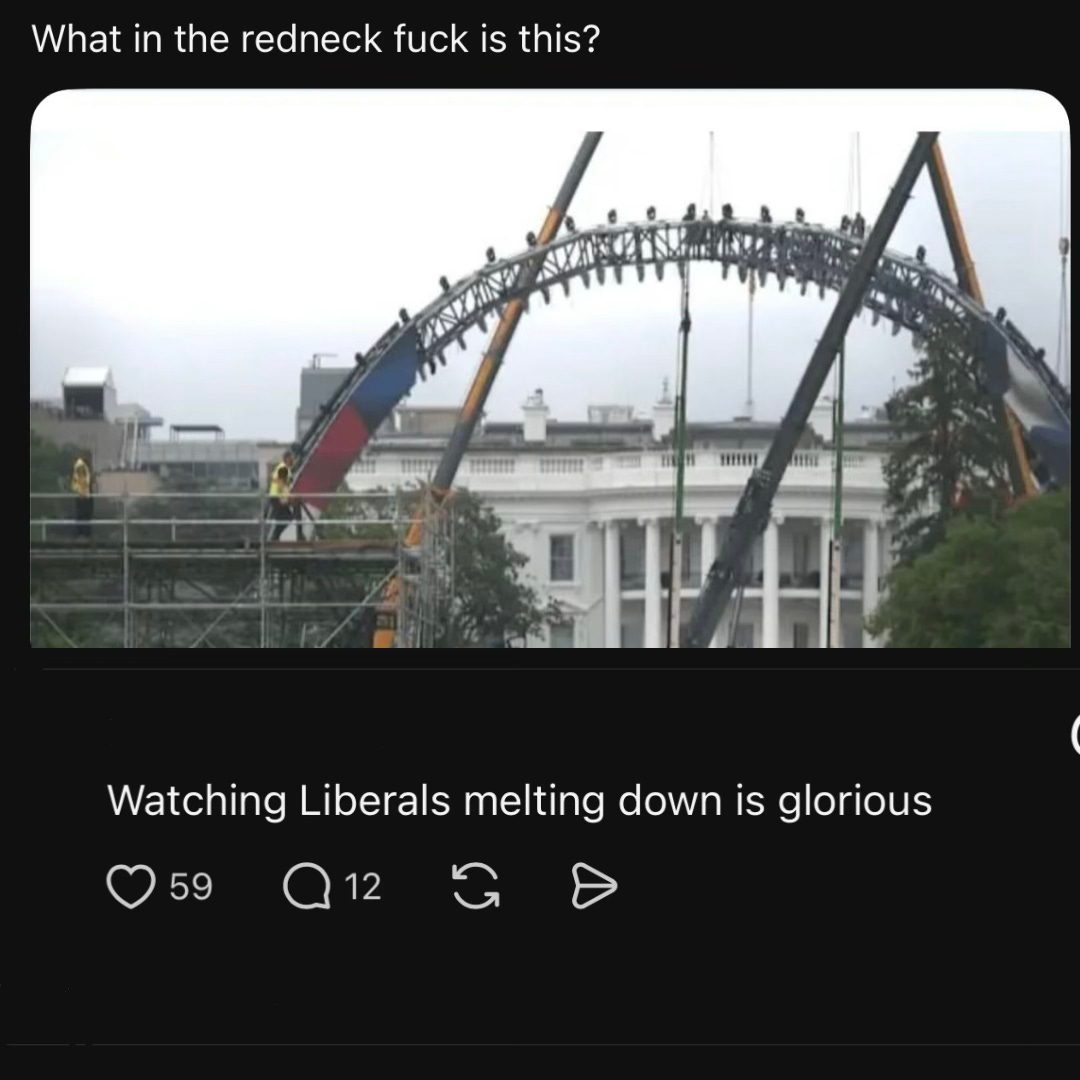
A White House crane, scaffolding, public money. Someone is furious. Someone else is delighted that they’re furious. The content almost doesn’t matter. The reaction is the whole point.
This is not new for me: I watched this playbook run for sixteen years in Hungary, but it took me at least ten to realize.
How the mechanism works
The Orbán system -especially in its later years- was no longer primarily about governing. It was about one thing: making liberals melt down - and through that, controlling the moment. Topics were injected into public discourse not because they mattered to the country, but because they were perfectly calibrated to provoke the other side. Push them through state media, and then watch the intellectuals, the influencers, the journalists, the ordinary people react: sharing it, arguing about it, denouncing it across every platform they could find.
And suddenly, across every media outlet, their topic was the topic. They controlled the moment. That was always the real goal with the whole thing: to controll the moment.
Our outrage was the fuel. Which is why the hardest thing to learn was this:
We must not participate in our own oppression. We must not give them the satisfaction of watching us come apart.
Their outrage machine needed our reaction to run. Our collective meltdown was not a side effect: it was the product. It held their base together as it gave their supporters exactly what they came for.
It took me years to see it
I was a regular outrage-poster. I felt like it mattered, like staying silent would be complicity. Outrage may be biological: our brains are wired for it. It comes so naturally. They know this very well, that’s why they count on it.
Slowly I understood: many of these stories existed for one reason only to make us react. And if we don’t? If nothing picks it up, if it doesn’t stay in the press because we didn’t feed it? It just dies, so they get nothing. The whole operation only works if we play along.
Sixteen years gives you a long time to recognize patterns. I’m repeating this because I want it to land for people who haven’t lived through what we lived through — who are watching this start to unfold around them now, in the US, in Western Europe.
What actually worked
In Hungary’s 2026 election campaign, the then-candidate for prime minister simply didn’t take the bait. When Orbán tried to set the agenda -to drag the opposition onto his terrain- he got no response. The provocations died out quickly, barely echoing. And the press ended up covering what the opposition campaign actually wanted to talk about: that the country wasn’t working, that people weren’t living well, that things had to change.
It sounds almost too simple. It wasn’t the only factor in Orbán’s defeat. But it was a significant one.
If we talk about what actually matters - how do we build a country that works, how do people live well, what does a functioning democracy actually require - then the small provocations lose their oxygen. They can’t dominate a conversation we’re not having with them.
Stay on your own narrative
This is hellishly hard. The hooks are designed to work on human brains. But understanding why they throw them in -that they do it precisely because they want to watch us lose our minds- that changes something.
Not every provocation deserves a response. The skill -the discipline- is knowing which ones to walk past. To hold your own story. To talk about what you actually want the world to look like, consistently, stubbornly, without taking every detour they lay out. Not reacting is sometimes the hardest political act. We need to see it as it is: not passivity, but strategy.
For 16 years I’ve lived through the slow erosion of democracy under Viktor Orbán’s rule. I write this series to share what I’ve learned - because I believe the Hungarian experience holds real lessons for anyone watching democracy weaken in their own country.
Now that you’ve read all this, please like, subscribe, share, or at minimum nod approvingly at your screen. I need to know this is not just me, alone, explaining Central European democratic collapse to my wifi router. Show me you’re out there, or I will continue refreshing my stats at 2am, pretending I am a serious person who does not care about such things, when I am, in fact, absolutely, desperately, embarrassingly not.
Liked this? Subscribe. Already subscribed? Become a paid subscriber. Already a paid subscriber? I love you. Please tell a friend.
Brilliant again: and a timely reminder…
It matters. I live in the U.S. and some of us are working hard to change things (while most of us are willfully ignorant and not paying attention). Hearing about your experience is important to me and I would become a paying subscriber, but I am contributing more than I can afford to political campaigns and to mail GOTV postcards, etc. Please keep writing!